




"My daughter was self-conscious about her crowded teeth and had been struggling with restless sleep for years. After expansion with Marin Ortho, the difference was remarkable. Her smile opened up beautifully and she finally started sleeping through the night."
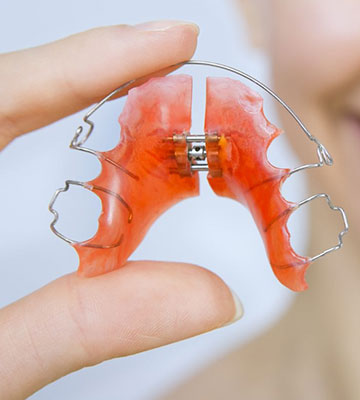
What is Palatal Expansion?
The upper jaw is formed from two bones that gradually fuse together during the teenage years. This fusion is a time-limited opportunity. By gently widening the palate before that midline fully closes, we can make meaningful structural changes that would require surgery later in adulthood.
Expansion creates more space in the mouth and nasal airway, supports balanced facial development, reduces crowding, and in many cases eliminates the need to remove permanent teeth later on.
Acting during the teen years, while the jaw is still responsive, makes all the difference.Expansion typically takes 6 to 12 months in total, including both the active expansion phase and the stabilization period that follows.
Which Type of Expander is Right for You?
We offer two approaches to palatal expansion for teens: traditional expanders and Invisalign expansion. Dr. Gorton will recommend the right option based on your anatomy, age, lifestyle, and treatment goals. Both approaches deliver comparable results.
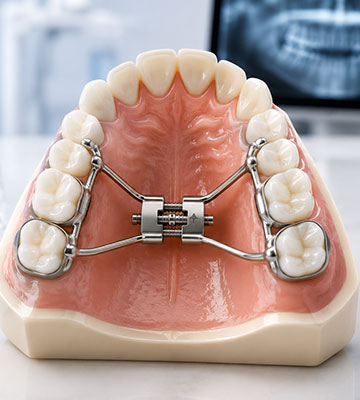
Traditional Expanders
A traditional expander is bonded directly to the back teeth and works by gently widening the upper palate over time. It is turned once daily for approximately six weeks until the ideal width is reached, then left in place for around six months to allow the bone to stabilize.
Because it works continuously, a traditional expander is an excellent choice for teens who prefer a reliable, set-it-and-forget-it approach.
It is placed on the palate and attached to the back teeth, making it relatively discreet. We provide dental pipe cleaners to help keep the area clean and comfortable.
One thing to expect: traditional expanders will create a small gap between the front teeth as the palate widens. This is completely normal and actually a welcome sign that space is being created. Any spacing can be easily addressed with Invisalign after expansion is complete, free of charge.
Particularly effective for: Teens with airway concerns or sleep issues, patients who want consistent around-the-clock expansion, and cases where a fixed appliance is the most reliable path to results.
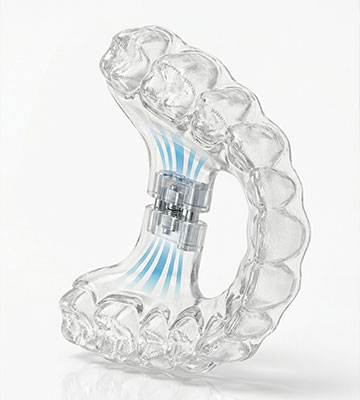
Invisalign Expansion
For teens who qualify, Invisalign clear aligners can achieve palatal expansion with outstanding results. Aligners are nearly invisible, removable, free of restrictions on eating or activities.
Aligners are worn for around 23 hours per day and changed weekly as the arch gradually widens.
Because the aligners are created in advance using digital imaging, the number of in-office visits is reduced, and progress can be monitored remotely through an app, which many teens and families find especially convenient.
Invisalign can also be used alongside other appliances such as sectional braces or habit appliances, making it a flexible option within a broader treatment plan.
A good fit for teens who: Are committed to wearing their aligners consistently, prefer a more discreet and flexible experience, and appreciate fewer office visits with the option of remote monitoring
Why Timing Matters for Teens
Unlike younger children, teens are approaching the end of the window for surgical-free expansion. The two bones of the upper jaw gradually fuse at the midline as the teen years progress.
Once that fusion is complete, palatal widening requires surgical intervention. Treating now, while the jaw is still responsive, allows us to make meaningful changes simply and effectively. Waiting can turn a straightforward procedure into a far more involved one.
The Benefits Go Beyond Straighter Teeth
Treating teens during this critical growth window can deliver benefits that last a lifetime:

- Improved breathing and airway health
- Better sleep quality
- Reduced crowding and a lower likelihood of tooth removal
- Healthier facial development and balance
- A stronger foundation for any future orthodontic treatment
- Greater confidence in your smile